Technical white paper · Vanguard Swimming · Est. 1993
Most goggle leaks trace back to one component: the glue line. Our patented co-injection process eliminates it by bonding medical-grade liquid silicone rubber (LSR) to the polycarbonate lens at the molecular level, in a single molding cycle. This page explains the engineering, the failure science it replaces, and the process control behind batch-identical seals.
Co-injection molding (also called two-material or 2K molding in the broader plastics industry) combines two dissimilar materials into a single finished part within one machine cycle. In swim goggle production, the silicone seal and the rigid lens are not assembled after the fact. They are formed together.
The process: medical-grade liquid silicone rubber is injected directly onto a pre-positioned polycarbonate lens (or frame insert) inside a precision mold, where it flows, wets the substrate, and cures into a permanent molecular-level bond: a sealed sub-assembly in one cycle, with no adhesive layer anywhere in the joint.
This changes the product’s architecture. A traditional goggle is an assembly of lens + gasket + adhesive, and each interface is a potential leak path. A co-injection goggle is a single part: silicone and polycarbonate meet at a boundary where intermolecular forces (van der Waals attraction and, on activated surfaces, covalent bonding) hold the materials together across the full contact area.
Why “co-injection” and not “overmolding”? LSR injection and lens substrate are integrated in a single production cell with shared tooling. The bond forms while both materials are at process temperature, not via a room-temperature adhesive applied between finished parts days apart. All parameters are controlled in-house.
The polycarbonate lens (or tempered glass) is molded, inspected, and positioned into the co-injection mold cavity. Surface activation ensures the silicone wets it properly.
Two-component liquid silicone rubber is metered, mixed, and injected, flowing around the lens substrate and filling the seal geometry defined by the CNC-machined cavity.
Under controlled temperature and pressure, the LSR cures via a platinum-catalyzed addition reaction while in intimate contact with the substrate, bonding across the entire interface, not at discrete glue points.
The finished lens-and-seal unit ejects as one part. No curing racks, no adhesive drying time, no secondary bonding operation.
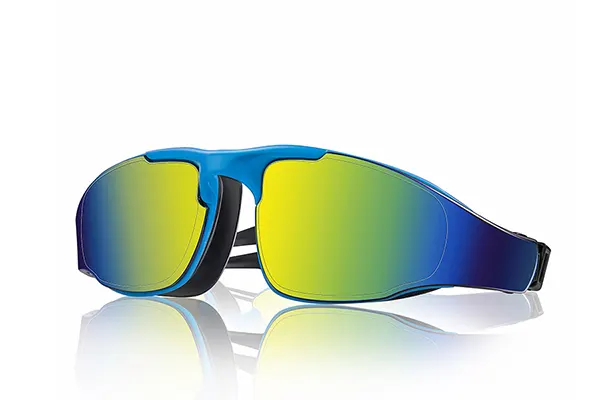
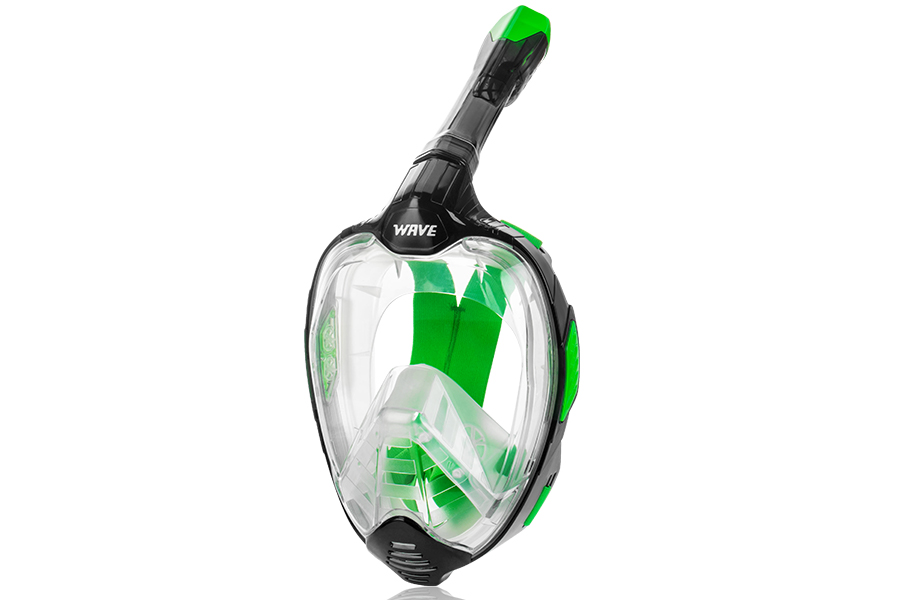
Wide-vision anti-fog goggles built on the co-injection sealing platform
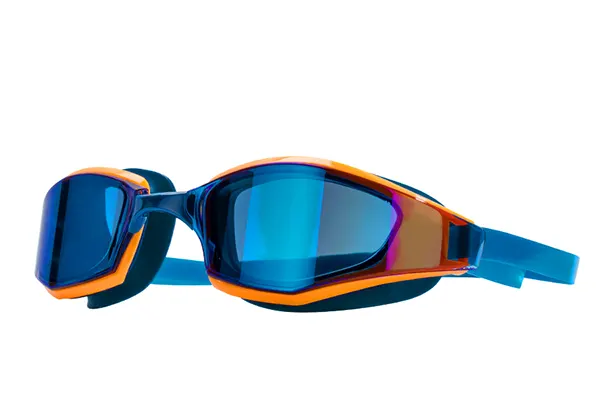
Finished co-injection seal: no visible glue line between gasket and lens
Adhesive-bonded goggles do not fail randomly. They fail through four predictable mechanisms, all rooted in the fact that the adhesive is a third material sandwiched between two others, with its own degradation chemistry.
Failure Mode 1
Pool water contains free chlorine (hypochlorous acid); saltwater is an electrolyte. Both attack typical adhesive polymer chains: chlorine oxidizes the bond surface, breaking crosslinks and converting a flexible joint into a brittle, chalky layer. This is why glued goggles often survive their first season and fail in their second: degradation is cumulative and invisible until the seal opens.
Failure Mode 2
Outdoor swimming exposes the glue line to UVA/UVB radiation. Most structural adhesives absorb UV and undergo chain scission, losing elasticity. The silicone gasket itself is UV-stable, but the adhesive holding it is not. The result is a stiffened ring that can no longer conform to micro-irregularities on the lens surface, creating water ingress channels even without visible cracking.
Failure Mode 3
Silicone and polycarbonate expand and contract at different rates. Every temperature swing, from a hot car trunk to a cold pool, shears the adhesive layer between them. Over hundreds of cycles, this fatigue propagates micro-cracks along the bond line, and each crack becomes a capillary channel that wicks water inward by surface tension.
Failure Mode 4
Once a micro-gap opens, failure accelerates. Moisture-laden air enters the lens cavity during wear; when the lens surface is cooler than the trapped air (which it always is in pool water), condensation forms inside. Fogging is therefore a symptom of seal failure, not coating failure. Anti-fog sprays cannot fix a leak path; they only mask its consequence.
Co-injection does not use a better glue. It removes the glue from the architecture. The LSR-to-polycarbonate interface forms at process temperature across 100% of the contact area, with no discrete adhesive layer to oxidize, embrittle, or fatigue. No third material with mismatched properties, no bond line to propagate cracks, no capillary path for moisture. The failure modes above cannot occur because the component that fails simply does not exist.
Side-by-side comparison
Engineering and commercial differences between the two construction methods, based on our production data and after-sales tracking across both product types.
| Dimension | Co-injection (molecular bond) | Glued assembly (adhesive joint) |
|---|---|---|
| Seal architecture | Single part; LSR bonded across the full lens interface | Three-material stack: lens + adhesive + gasket |
| Leak resistance over time | No glue line to degrade under chlorine, UV, or thermal cycling | Adhesive oxidizes and embrittles; micro-gaps open within 1-2 seasons |
| Anti-fog durability | Sealed cavity blocks moisture ingress; treatment molded into the lens | Fog follows leak paths; post-assembly sprays wash off |
| Batch consistency | Computer-controlled cycle, ±0.05 mm accuracy, identical every shot | Manual adhesive application varies unit to unit |
| Long-term durability | Bond strength matches the substrate; no aging interface | Adhesive is the weakest link and degrades first |
| Cost structure | Higher tooling; lower labor, zero seal-defect rework | Lower tooling; higher labor and seal-related scrap |
| After-sales exposure | Leak complaints eliminated at the design level | Leak and fog complaints lead category returns |
Note on cost: co-injection requires higher upfront tooling, reflected in our 1,000-piece-per-color MOQ (versus 300 for standard assembly). For established brands, eliminating seal-related returns and warranty claims typically offsets the tooling within the first order cycle.
A co-injection bond is only as reliable as the process that forms it. Consistency at production scale comes from three pillars: controlled machinery, qualified materials, and verified output.

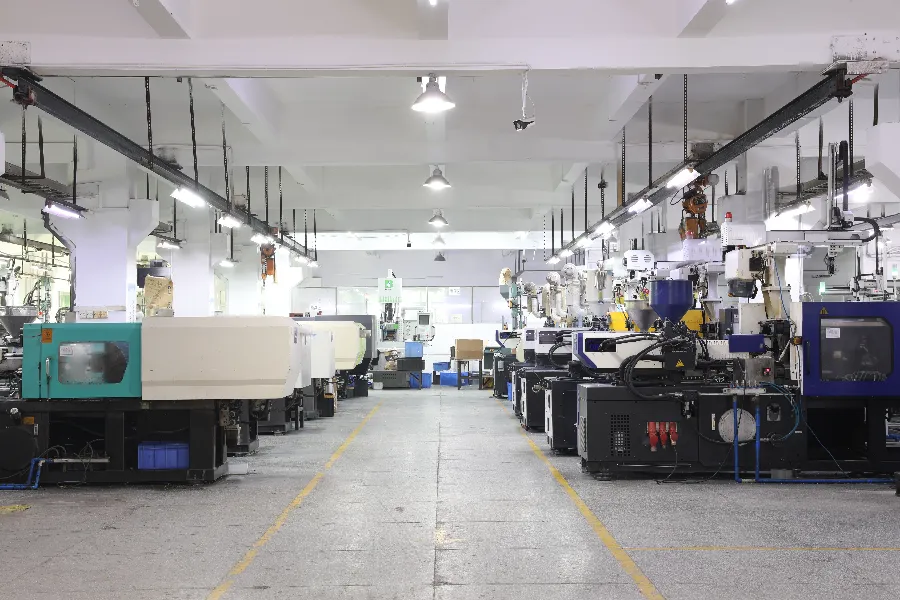
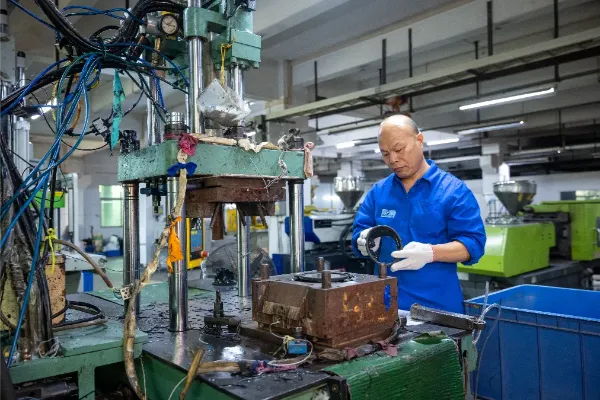
65 injection molding machines across 4 dedicated production lines in our 27,824 m² Guangzhou facility. Temperature, pressure, and cure timing are set, monitored, and logged by computer control for every cycle, removing operator-dependent variation from the bonding process.

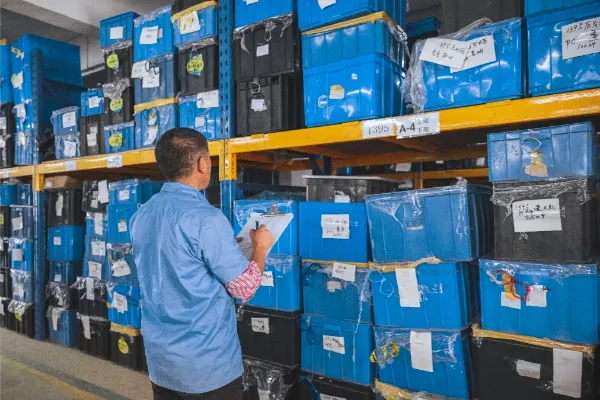
Seals use platinum-cure liquid silicone rubber qualified to medical-grade standards: hypoallergenic for prolonged skin contact, stable across a wide temperature range, and resistant to chlorine, saltwater, and UV. Every incoming material batch is inspected against ISO 9001 receiving criteria before release to production.

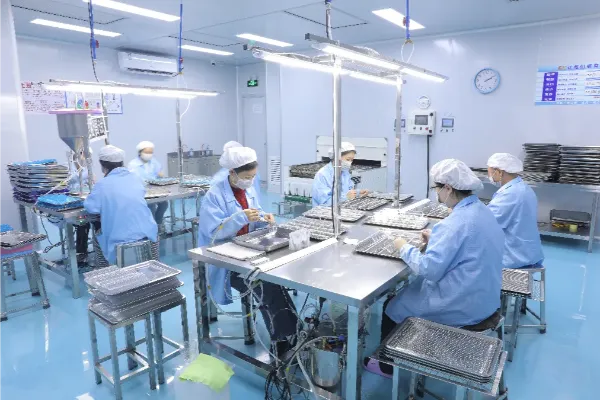
Every production batch passes in-house air-tightness testing before packing, not just first-article checks, with anti-fog performance verified on the same basis. Records are tied to batch codes and fully traceable; reports are available to buyers, and third-party pre-shipment inspection (SGS, Intertek) can be arranged on request.
LSR is injected as a low-viscosity two-component system that cures via platinum-catalyzed hydrosilylation, a clean addition reaction with no byproducts. It flows into fine seal geometries better than heat-cured solid silicone (HCR) and cures on a more consistent profile, giving uniform hardness, elasticity, and bond strength across every unit.
The entire process runs under our ISO 9001:2015 system: documented work instructions at every station, calibrated equipment, incoming material inspection, in-process QC checks, and finished-goods verification. BSCI, CE, FDA, and OEKO-TEX Standard 100 documentation covers material and social compliance for US and EU market entry.
Our co-injection process and panoramic mask structures are protected by multiple domestic and international patents covering functional mechanisms and industrial design. This IP portfolio is why competitors cannot simply copy the process, and why products built on our platform carry defensible differentiation.
A dedicated 15-person R&D team handles product design, mold engineering, and process development in-house. From initial sketch to production-ready tooling, the entire development chain stays in one facility under NDA: no outsourced mold shops, no shared drawings.
All molds are designed in CAD/CAM and machined on in-house CNC equipment. This vertical integration is what makes ±0.05 mm dimensional control possible: the tooling that defines seal geometry is built and maintained by the same team that runs the molding process.
Our M-1502 full-face panoramic mask applies the same co-injection and patented sealing technology to a far larger seal perimeter than a goggle. In 2019, a single 50,000-unit order of this mask ran under the same batch-level testing protocol, evidence the process holds at volume, not just in sampling.
Our R&D engineers join calls with brand development teams regularly. Send your spec sheet or failure analysis and we will respond with an engineering assessment within one business day.
Talk to an EngineerSend us your target specification: lens type, seal geometry, volume, and timeline. Our engineering team replies within one business day with tooling cost, MOQ, and lead time. NDA before drawings; sample fees credited to first order.